
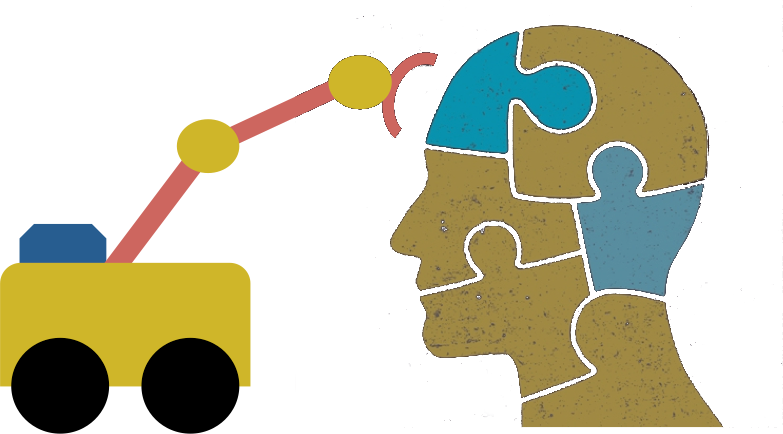
Learning and Adaptation
This thrust studies how robots can learn human preferences and adapt to them during collaborative work, while accounting for the fact that humans adapt in turn. The aim is mutual learning techniques that support fluent, long-term interaction between robotic and human teammates rather than one-shot preference inference.
← All research areas
Related work
-
Reward Learning from Human Feedback Featured
Studying how robots learn preferences from human feedback, and the failure modes that arise when that feedback is biased or sparse.
Robots that learn from human feedback need to adapt to preferences that are often expressed indirectly, inconsistently, or with only partial information. This project studies reward learning and reward transfer techniques for sequential decision-making, including empirical work identifying failure modes in reward models trained from human feedback, toward mutual learning that supports fluent long-term collaboration.